Introduction: The Challenge of Modern Warehouse Management
In today’s fast-moving supply chain environment, warehouses are under increasing pressure to improve efficiency, reduce operational costs, and maintain accurate inventory data.
Traditional inventory management methods, such as manual counting, barcode scanning, and paper-based records, often create challenges including:
- Slow inventory tracking processes
- Human errors during stock counting
- Difficulty locating materials and assets
- Lack of real-time inventory visibility
- Inefficient warehouse operations
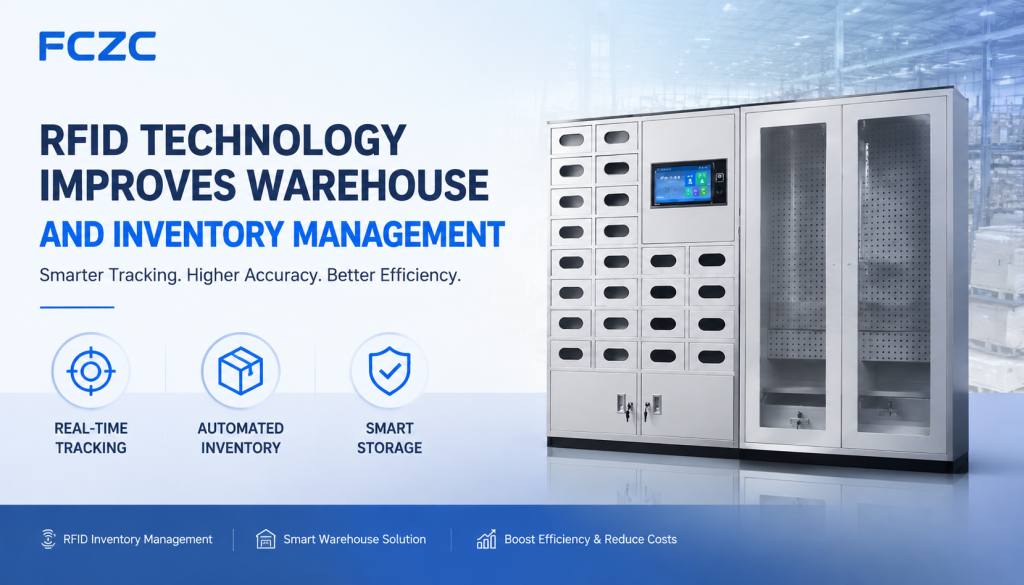
To overcome these challenges, more companies are adopting RFID Inventory Management technology as part of a modern Smart Warehouse Solution.
RFID technology enables automated identification, real-time tracking, and intelligent management of inventory, helping warehouses achieve higher accuracy and operational efficiency.
What Is RFID Inventory Management?
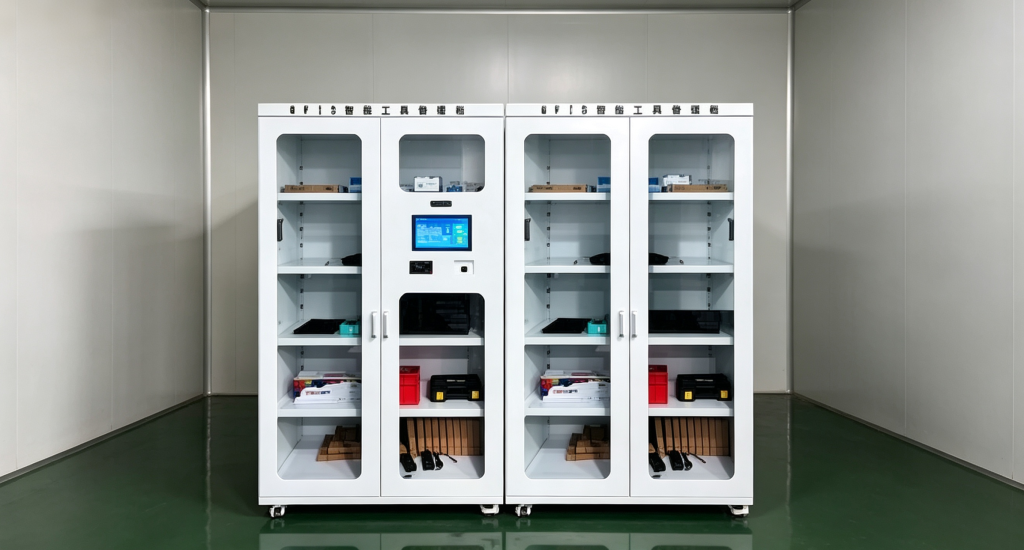
RFID Inventory Management is an automated inventory control system that uses Radio Frequency Identification (RFID) technology to identify, track, and manage items throughout warehouse operations.
Unlike traditional barcode systems that require direct scanning, RFID technology can automatically read multiple tagged items simultaneously without physical contact.
An RFID inventory management system typically includes:
- RFID tags attached to products, tools, or materials
- RFID readers for data collection
- Intelligent storage cabinets or smart lockers
- Warehouse management software
- Real-time inventory monitoring platforms
By connecting physical inventory with digital management systems, RFID creates a transparent and intelligent warehouse environment.
How RFID Technology Improves Warehouse Operations
1. Real-Time Inventory Visibility
One of the biggest advantages of RFID Inventory Management is real-time inventory tracking.
Traditional inventory systems often require employees to manually check stock levels, which takes significant time and may result in inaccurate data.
With RFID technology:
- Inventory information updates automatically
- Warehouse managers can check item status instantly
- Stock levels are monitored in real time
- Missing or misplaced items can be identified quickly
This improves inventory accuracy and helps companies make faster operational decisions.
2. Faster Inventory Counting and Reduced Labor Costs
Manual inventory counting can be time-consuming, especially in large warehouses with thousands of items.
RFID technology allows employees to complete inventory checks much faster.
For example:
Traditional barcode counting:
- Requires scanning each item individually
- Needs direct line-of-sight scanning
- Requires more labor involvement
RFID inventory counting:
- Reads multiple items simultaneously
- Reduces manual operations
- Improves counting efficiency
For warehouses managing large quantities of materials, RFID can significantly reduce workload and improve productivity.
3. Improved Asset and Material Tracking
Many industries face challenges managing valuable tools, spare parts, and production materials.
Without accurate tracking, companies may experience:
- Lost equipment
- Unauthorized usage
- Incorrect stock records
- Production delays
By integrating RFID with intelligent storage equipment, companies can monitor:
- Who accessed an item
- When the item was removed
- When it was returned
- Current inventory status
RFID-enabled cabinets provide a secure and transparent way to manage tools, components, and high-value assets.
RFID and Smart Warehouse Solution: Building Intelligent Storage Systems
A modern Smart Warehouse Solution combines RFID technology, automation equipment, and digital management software to create a more efficient warehouse ecosystem.
Compared with traditional storage methods, smart warehouses provide:
| Traditional Warehouse | Smart Warehouse Solution |
|---|---|
| Manual inventory tracking | Automated inventory monitoring |
| Paper records | Digital management system |
| Limited visibility | Real-time data access |
| High labor requirements | Reduced manual operations |
| Higher error rates | Improved accuracy |
RFID technology is one of the key technologies driving warehouse digital transformation.
Applications of RFID Inventory Management in Different Industries
Manufacturing Industry
Manufacturers use RFID inventory systems to manage:
- Raw materials
- Production tools
- Spare parts
- Work-in-progress components
RFID helps ensure that production resources are available when needed and reduces downtime caused by missing materials.
Logistics and Distribution Centers
In logistics operations, RFID improves:
- Goods tracking
- Warehouse receiving
- Shipping accuracy
- Package identification
Companies can achieve faster processing speeds and better supply chain visibility.
Aerospace and Automotive Industries
These industries require strict control over expensive tools and components.
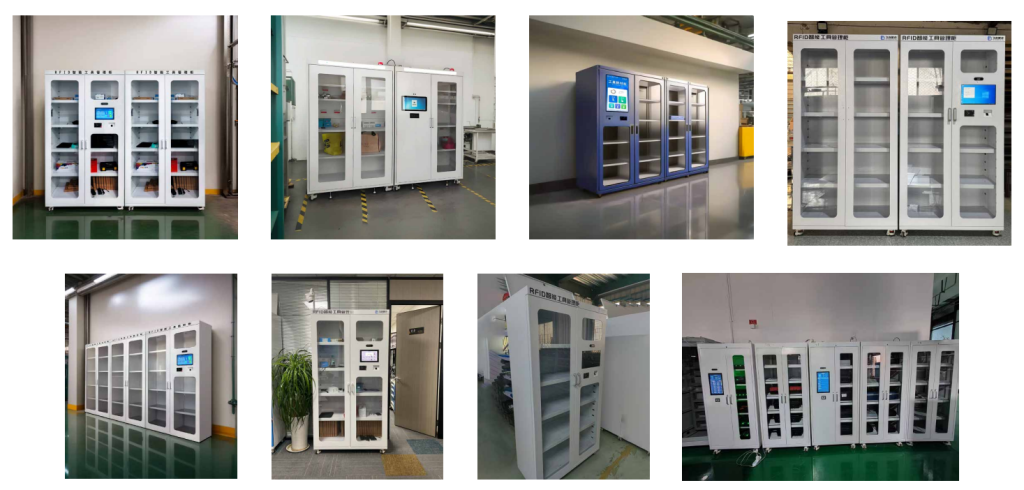
RFID smart cabinets help companies:
- Track tool usage
- Prevent equipment loss
- Improve maintenance management
- Maintain accurate records
Healthcare and Laboratories
Hospitals and laboratories use RFID-based storage solutions to manage:
- Medical supplies
- Laboratory equipment
- Controlled inventory
Automated tracking improves security and ensures critical items are always available.
Key Benefits of RFID-Based Smart Warehouse Solutions
Implementing an RFID Smart Warehouse Solution provides several business advantages:
✔ Higher Inventory Accuracy
RFID reduces human errors and provides reliable inventory information.
✔ Improved Warehouse Efficiency
Automated identification reduces manual processes and speeds up operations.
✔ Better Security and Control
Companies can monitor item movement and prevent unauthorized access.
✔ Reduced Operating Costs
Less manual labor and fewer inventory mistakes help reduce long-term costs.
✔ Data-Driven Decision Making
Real-time inventory data allows managers to optimize purchasing, storage, and operations.
Why Choose RFID Smart Cabinets for Inventory Management?
RFID smart cabinets are an important part of modern warehouse automation.
Unlike traditional storage cabinets, RFID-enabled cabinets provide:
- Automatic item identification
- Access control management
- Real-time inventory updates
- Usage history tracking
- Secure storage management
For companies managing tools, materials, documents, and valuable assets, RFID smart cabinets provide an efficient and reliable storage solution.
FCZC provides intelligent storage solutions including:
These solutions help companies improve warehouse efficiency and achieve smarter inventory management.
Future Trends: RFID and the Future of Smart Warehousing
As global supply chains become more digital and automated, RFID technology will continue to play an important role in warehouse transformation.
Future smart warehouses will combine:
- RFID technology
- Artificial intelligence
- IoT devices
- Warehouse management systems
- Automated storage equipment
Businesses that adopt intelligent inventory solutions can achieve better efficiency, accuracy, and competitiveness in the global market.
Conclusion
RFID technology is transforming traditional warehouse operations by providing faster identification, real-time inventory visibility, and intelligent asset management.
For companies looking to improve warehouse efficiency and reduce operational challenges, implementing an RFID Inventory Management system is a powerful step toward digital transformation.
A professional Smart Warehouse Solution not only improves inventory accuracy but also creates a more efficient, secure, and scalable warehouse environment.
With advanced RFID-based smart storage solutions, businesses can build the foundation for the future of intelligent warehousing.
Contact FCZC today to explore the right RFID inventory management solution for your business.