Introduction: The Challenge of Material Management in Modern Manufacturing
In modern manufacturing environments, efficient material management plays a critical role in maintaining productivity, reducing operational costs, and ensuring smooth production processes.
Traditional storage methods often rely on manual recording, fixed shelves, and employee experience to manage materials. However, as manufacturing operations become more complex, these methods can lead to problems such as material shortages, inaccurate inventory records, misplaced components, and inefficient searching processes.
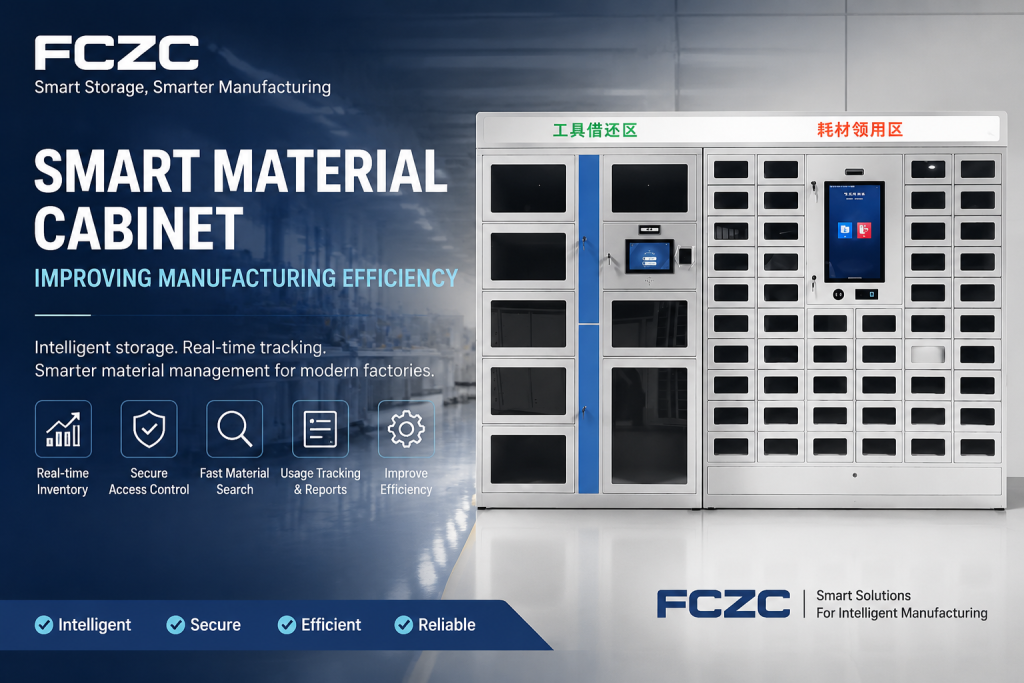
A Smart Material Cabinet provides an intelligent storage solution that helps manufacturers automate material management, improve inventory accuracy, and optimize workflow efficiency.
What Is a Smart Material Cabinet?
A Smart Material Cabinet is an intelligent storage system designed for managing production materials, spare parts, electronic components, tools, and other valuable items.
By integrating smart technologies such as the Internet of Things (IoT), automatic identification, and digital-intelligent management, smart material cabinets enable automated storage, tracking, and access control.
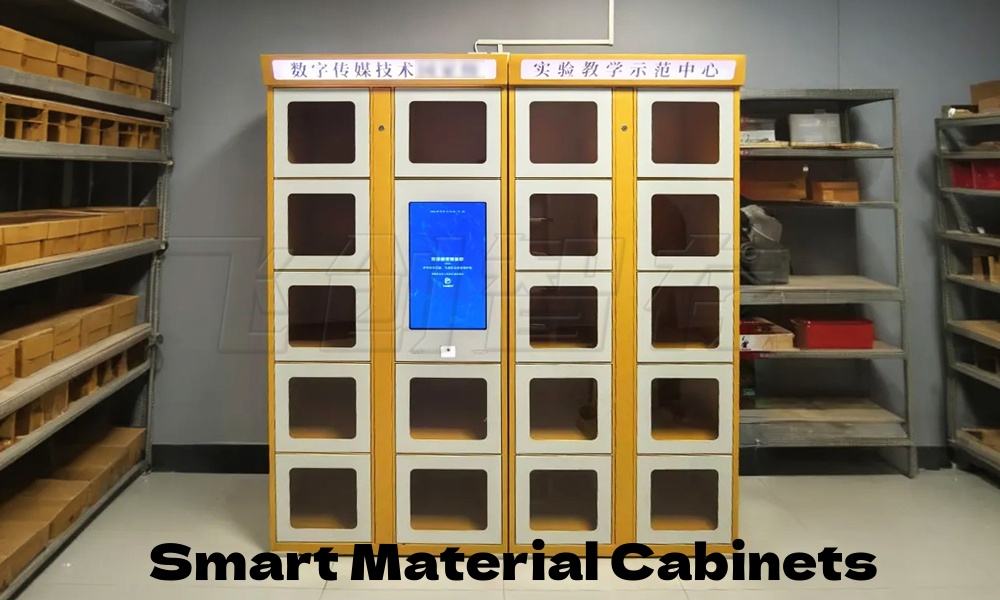
Unlike traditional cabinets, a Smart Material Cabinet can record:
- Who accessed the materials
- When materials were taken or returned
- Quantity changes in real time
- Current inventory status
This allows manufacturers to achieve more accurate and transparent material management.
How Smart Material Cabinets Improve Manufacturing Efficiency
1. Real-Time Inventory Management
One of the biggest challenges in manufacturing is keeping accurate inventory information.
Traditional management methods often require manual counting and paper records, which can result in:
- Inventory data delays
- Human recording errors
- Difficulty tracking material usage
A Smart Material Cabinet automatically updates inventory information after each operation, providing real-time visibility of stored materials.
Manufacturers can quickly check available stock levels and avoid production delays caused by missing components.
2. Reduce Material Search Time
In manufacturing facilities, employees often spend valuable time searching for specific materials or components.
Smart Material Cabinets organize items systematically and provide fast access through intelligent identification technology.
With clear inventory records and organized storage, workers can:
- Quickly locate required materials
- Reduce unnecessary movement
- Improve production efficiency
This is especially beneficial for factories managing thousands of small parts and production materials.
3. Prevent Material Loss and Misuse
Material loss and unauthorized usage can increase manufacturing costs.
A Smart Material Cabinet uses access control systems to ensure that only authorized personnel can access stored materials.
The system can track:
- User information
- Access history
- Material quantity changes
This improves accountability and reduces material waste caused by improper management.
4. Support Lean Manufacturing Processes
Lean manufacturing focuses on reducing waste and improving operational efficiency.
Smart Material Cabinets support lean production by helping companies:
- Reduce excess inventory
- Optimize material flow
- Improve workplace organization
- Minimize production interruptions
By integrating intelligent storage into production lines, manufacturers can create a more efficient and data-driven working environment.
Smart Material Cabinet Applications in Manufacturing
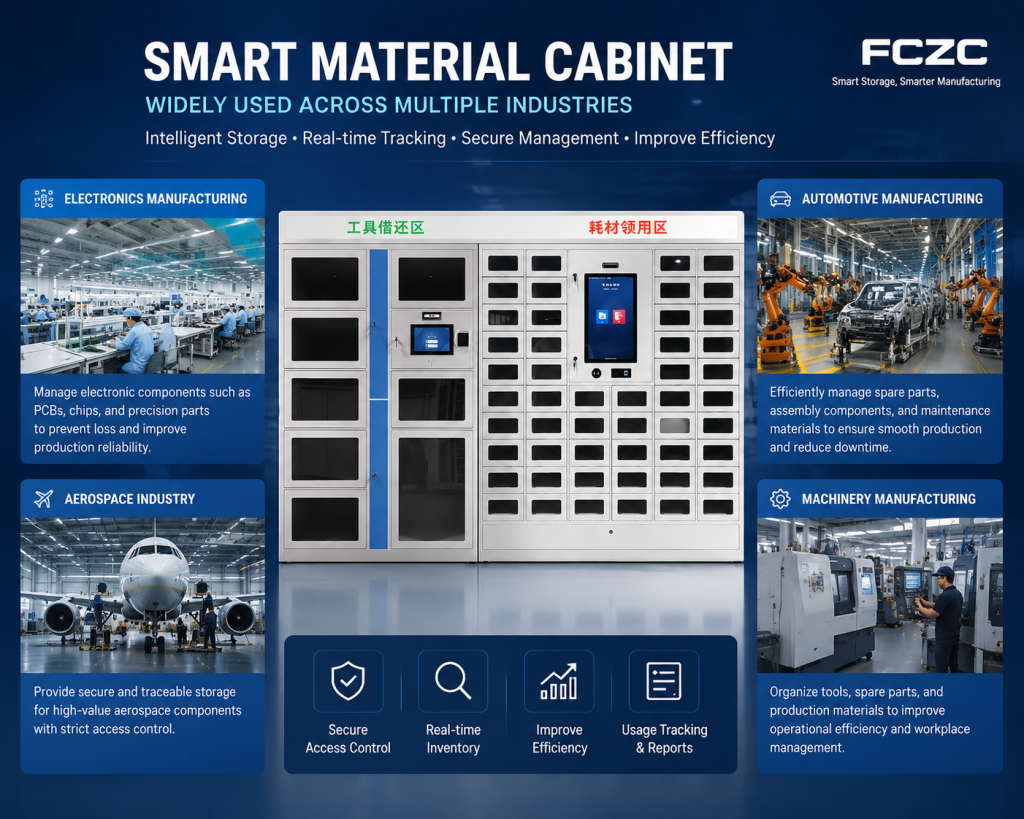
Smart Material Cabinets are widely used in different industries, including:
Electronics Manufacturing
Electronic components such as PCBs, chips, and precision parts require accurate storage and tracking. Smart cabinets help prevent component loss and improve production reliability.
Automotive Manufacturing
Automotive factories use smart material storage systems to manage spare parts, assembly components, and maintenance materials efficiently.
Aerospace Industry
High-value aerospace components require strict tracking and controlled access. Smart Material Cabinets provide secure and traceable storage solutions.
Machinery Manufacturing
Manufacturers can use smart cabinets to manage tools, spare parts, and production materials while improving operational efficiency.
Smart Material Cabinet vs Traditional Storage Cabinet
| Feature | Traditional Cabinet | Smart Material Cabinet |
|---|---|---|
| Inventory Tracking | Manual records | Automatic tracking |
| Access Control | Key or basic lock | Intelligent authorization |
| Inventory Accuracy | Easily affected by errors | Real-time data |
| Material Search | Time-consuming | Fast identification |
| Management Method | Manual operation | Digital management |
Compared with traditional storage solutions, Smart Material Cabinets provide manufacturers with higher efficiency, better security, and improved inventory control.
Why Choose FCZC Smart Material Cabinet Solutions?
FCZC specializes in developing intelligent storage solutions for global manufacturing companies.
Our Smart Material Cabinets combine advanced technology with practical industrial applications to help businesses improve material management efficiency.
Key advantages include:
- Intelligent access control
- Real-time inventory monitoring
- Customized cabinet designs
- Suitable for different manufacturing environments
- OEM & ODM services available
Whether for electronics factories, automotive production lines, or industrial workshops, FCZC provides reliable smart storage solutions designed for modern manufacturing needs.
Conclusion: Build a Smarter Manufacturing Future
As manufacturing continues to move toward digitalization and automation, efficient material management has become essential.
A Smart Material Cabinet helps companies reduce inventory errors, improve production efficiency, and achieve smarter warehouse and factory management.
By adopting intelligent storage technology, manufacturers can create more organized, efficient, and cost-effective production environments.
Upgrade your material management with FCZC Smart Material Cabinet solutions and take the next step toward intelligent manufacturing.