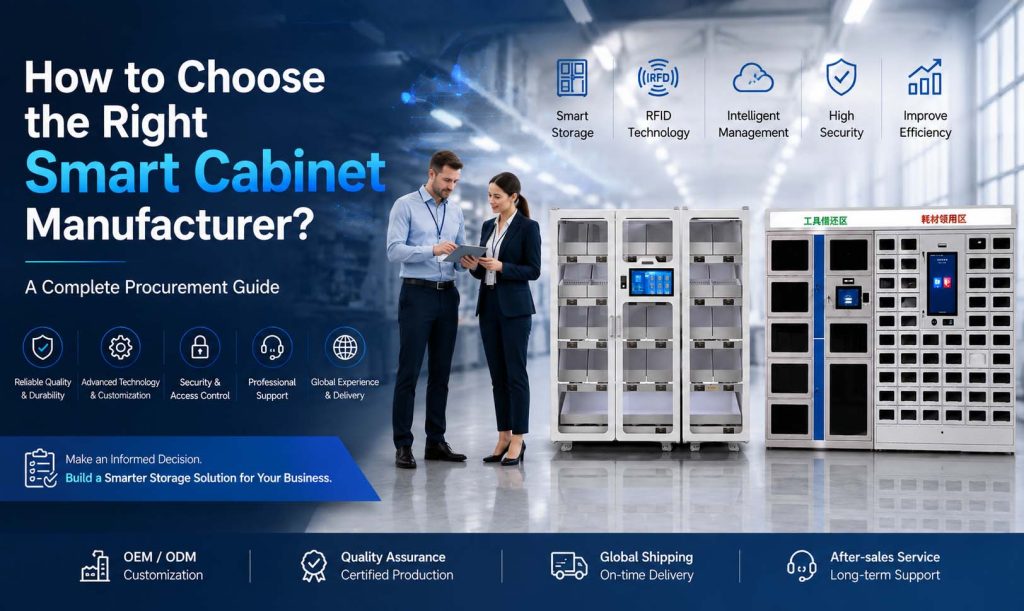
Choosing the right Smart Cabinet Manufacturer is an important decision for businesses looking to improve storage efficiency, asset management, security, and operational visibility. Whether you need smart tool cabinets for a factory, RFID cabinets for inventory management, or smart lockers for employees, the right supplier can significantly affect your project’s long-term performance and total cost.
With many manufacturers and suppliers offering similar-looking products, it can be difficult to know which one is the right fit.
This guide explains the key factors to consider when selecting a reliable Smart Cabinet Manufacturer or Smart Locker Supplier.
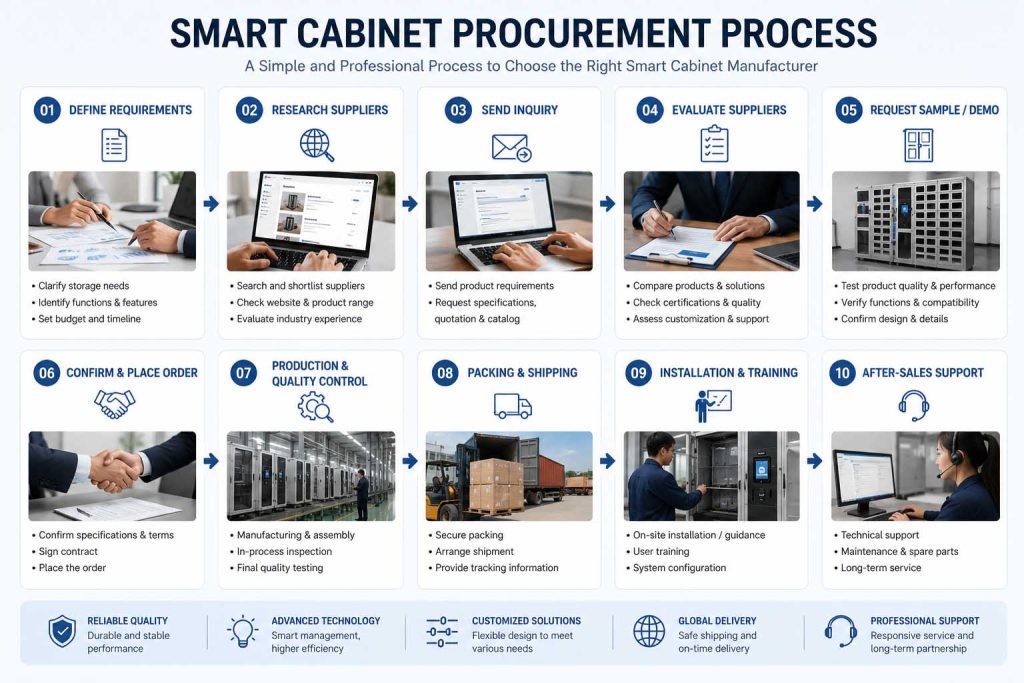
1. Define Your Storage Requirements First
Before comparing manufacturers, identify what you actually need the smart cabinet to accomplish.
Consider:
- What items will be stored?
- How many users will access the cabinets?
- What level of security is required?
- Do you need RFID identification or weighing technology?
- Is real-time inventory tracking necessary?
- Do you need integration with existing software?
- Will the cabinets be used indoors or in demanding industrial environments?
- Do you need customized cabinet dimensions or functions?
For example, a manufacturing facility may need an RFID tool cabinet to track tools and improve accountability, while an office or public facility may need smart lockers for secure personal-item storage.
A clear list of requirements makes it easier to compare different manufacturers objectively.
2. Check the Manufacturer’s Product Range
A professional Smart Cabinet Manufacturer should offer products that match different storage and management scenarios rather than relying on one standard cabinet.
Depending on your application, you may consider:
- Smart Tool Cabinets
- RFID Tool Cabinets
- Smart Material Cabinets
- RFID File Cabinets
- Smart Weighing Cabinets
- Smart Lockers
A wider product portfolio can be particularly valuable for companies planning multiple projects or expanding their intelligent storage systems in the future.
Instead of working with different suppliers for every application, you may be able to develop a complete smart storage solution with one experienced manufacturer.
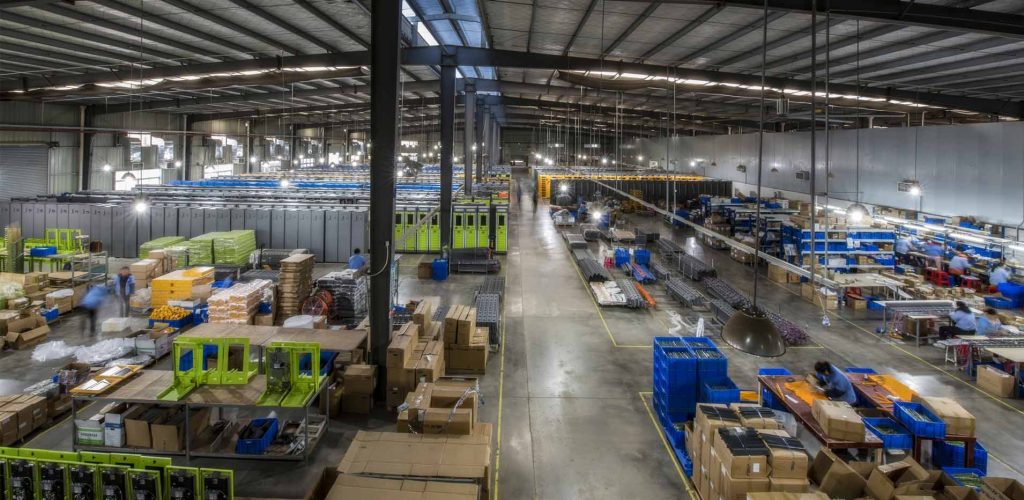
3. Evaluate Manufacturing Capabilities
A supplier’s website may show attractive product images, but purchasing decisions should also consider its actual manufacturing capabilities.
Ask potential manufacturers about:
- Factory location and production facilities
- Production capacity
- Quality control procedures
- Hardware manufacturing capabilities
- Software and system development
- Testing procedures
- Production lead times
- Quality certifications
- Export experience
A manufacturer with its own production capabilities generally has better control over product quality, customization, delivery schedules, and after-sales support.
This is especially important for B2B projects involving multiple cabinets or customized configurations.
4. Look for OEM and ODM Capabilities
Every business has different requirements. A standard product may not always fit your application.
A reliable Smart Cabinet Manufacturer should be able to provide customization options such as:
- Cabinet dimensions
- Number of compartments
- Door configuration
- Locking systems
- RFID technology
- Barcode or QR code identification
- Weighing modules
- Touchscreen interfaces
- Access control methods
- Software functions
- Branding and appearance
OEM and ODM capabilities are particularly important for distributors, system integrators, and businesses developing their own smart storage solutions.
Before placing an order, ask the supplier what can be customized and whether customization affects the minimum order quantity or lead time.
5. Examine the Technology Behind the Cabinet
A smart cabinet is more than a metal storage unit with an electronic lock.
Depending on the application, the system may include:
- RFID identification
- Electronic locks
- User authentication
- Weight sensors
- Inventory monitoring
- Access records
- Cloud-based management
- Local software
- Data reporting
- Real-time notifications
When evaluating a Smart Locker Supplier, pay attention to how the hardware and software work together.
A good solution should make storage management easier rather than create another complicated system for employees to operate.
6. Ask About Software and System Integration
For industrial and enterprise applications, software compatibility can be just as important as cabinet hardware.
Ask whether the supplier provides:
- Management software
- User management
- Permission management
- Inventory records
- Access history
- Real-time monitoring
- Data export
- API integration
- ERP or MES integration
For example, a manufacturing company may want its smart tool cabinet to work with an existing tool management or production management system.
If integration is required, discuss technical requirements with the manufacturer before purchasing rather than discovering compatibility issues after installation.
7. Compare Security Features
Security is one of the main reasons businesses choose intelligent cabinets.
Depending on the application, consider:
- RFID access
- PIN codes
- Fingerprint identification
- Employee cards
- QR codes
- Biometric authentication
- Electronic locks
- Access permissions
- Audit trails
- Unauthorized access alerts
For tools, materials, documents, and valuable assets, the system should not only restrict unauthorized access but also record who accessed the cabinet and when.
This creates greater accountability and improves asset security.
8. Evaluate Product Quality and Durability
Industrial smart cabinets may be opened and closed hundreds or thousands of times. They must therefore be designed for long-term use.
Important factors include:
- Cabinet material
- Surface treatment
- Door strength
- Lock durability
- Electronic components
- Sensor accuracy
- Cable management
- Ventilation
- Ease of maintenance
If the cabinet will be installed in a factory or warehouse, also consider environmental conditions such as dust, temperature, humidity, and frequency of use.
Ask the manufacturer about product testing and expected service life where relevant.
9. Check Certifications and Compliance
Depending on your target market, your smart cabinet may need to comply with specific safety and electrical requirements.
Before ordering, ask the manufacturer for applicable documentation, such as:
- CE
- EMC-related documentation
- RoHS
- Electrical safety documentation
- Quality management certifications
- Other market-specific certifications
Do not assume that a supplier has all required certifications simply because they are listed on a website. Ask for the relevant documents and confirm that they apply to the specific product you intend to purchase.
10. Consider the Manufacturer’s Export Experience
If you are purchasing from an overseas manufacturer, international project experience can make communication and delivery much easier.
A reliable Smart Locker Supplier should ideally understand:
- International shipping
- Export documentation
- Packaging requirements
- Installation requirements
- Different voltage standards
- Regional compliance
- International communication
- After-sales service
You can also ask whether the supplier has experience serving customers in your target country or region.
This can help reduce potential problems during shipment, installation, and commissioning.
11. Compare Total Cost, Not Just Unit Price
The cheapest smart cabinet is not necessarily the most cost-effective option.
When comparing suppliers, consider the total cost of ownership:
Total Cost = Product Cost + Customization + Software + Shipping + Installation + Maintenance + Potential Upgrade Costs
A low-priced cabinet may become more expensive if it requires additional software, complicated installation, frequent maintenance, or expensive replacement components.
Instead of asking only:
“How much does one cabinet cost?”
consider asking:
“What is included in the complete solution?”
This gives you a much more accurate basis for comparing suppliers.
12. Evaluate Communication and After-Sales Support
Good communication is especially important for customized B2B projects.
Before placing an order, evaluate how quickly and professionally the supplier responds to questions about:
- Product specifications
- Customization
- Technical requirements
- Samples
- Production
- Shipping
- Installation
- Software
- Warranty
- Maintenance
A professional manufacturer should be able to provide clear technical information instead of simply sending a product price.
After-sales support is equally important. Ask about warranty periods, spare parts, remote technical support, software updates, and troubleshooting procedures.
13. Request Samples or a Product Demonstration
If possible, request a sample cabinet or arrange a product demonstration before placing a large order.
During evaluation, test:
- Access speed
- Lock operation
- RFID recognition
- User authentication
- Inventory accuracy
- Software interface
- Data recording
- Cabinet construction
- Ease of operation
For large projects, a pilot installation can be particularly useful. It allows your team to identify technical or operational issues before deploying the solution across an entire facility.
14. Create a Supplier Evaluation Checklist
To make your purchasing decision more objective, score potential manufacturers based on several categories.
| Evaluation Factor | Key Questions |
|---|---|
| Product Quality | Is the cabinet durable and well manufactured? |
| Technology | Does it provide the required RFID, weighing, or access technology? |
| Customization | Can the manufacturer adapt hardware and software? |
| Software | Does the system provide the functions you need? |
| Integration | Can it connect with existing systems? |
| Certifications | Does the product meet your market requirements? |
| Manufacturing | Does the supplier have reliable production capabilities? |
| Export Experience | Has the supplier served international customers? |
| After-Sales Service | Is technical support available after delivery? |
| Total Cost | What is included in the final project price? |
This approach helps procurement teams compare suppliers based on overall value rather than price alone.
15. Questions to Ask a Smart Cabinet Manufacturer
Before selecting a supplier, consider asking these questions:
- Are you a manufacturer or a trading company?
- Where are your production facilities located?
- What smart cabinet products do you manufacture?
- Can you provide OEM and ODM services?
- What customization options are available?
- What RFID or access technologies do you support?
- Is management software included?
- Can the system integrate with ERP, MES, or other platforms?
- What certifications are available?
- What is your standard production lead time?
- What is the minimum order quantity?
- Can you provide samples?
- What warranty and after-sales services do you provide?
- Do you have experience exporting to my country?
- Can you provide a complete quotation including customization and shipping?
A supplier that can answer these questions clearly is generally easier to evaluate and work with.
Smart Cabinet Manufacturer vs. Smart Locker Supplier: What Should You Choose?
The right supplier depends on your application.
A Smart Cabinet Manufacturer may be a better choice when you need specialized industrial storage solutions such as tool cabinets, material cabinets, RFID cabinets, or weighing cabinets.
A Smart Locker Supplier may be more suitable when your primary requirement is secure personal-item storage for workplaces, schools, hospitals, transportation facilities, or public spaces.
However, many professional manufacturers can provide multiple types of intelligent storage products. Working with one supplier that can support different applications may simplify procurement, customization, and long-term maintenance.
Why Choosing the Right Manufacturer Matters
The right intelligent storage system can deliver benefits beyond physical storage.
A properly designed solution can help businesses:
- Improve inventory visibility
- Reduce manual management
- Strengthen asset security
- Improve tool accountability
- Reduce material loss
- Increase workplace efficiency
- Track user access
- Support digital transformation
For this reason, choosing a manufacturer should be treated as a long-term technology and procurement decision rather than simply a price comparison.
Final Checklist Before Placing an Order
Before signing a purchase agreement, make sure you have confirmed:
- Product specifications
- Cabinet dimensions and configuration
- Access and identification methods
- Software functions
- System integration requirements
- Customization requirements
- Certifications
- Production lead time
- Packaging and shipping
- Installation requirements
- Warranty terms
- After-sales support
- Total project cost
Conclusion
Choosing the right Smart Cabinet Manufacturer or Smart Locker Supplier requires more than comparing product prices. Businesses should evaluate manufacturing capabilities, technology, customization, software, security, certifications, export experience, and after-sales service.
For industrial and enterprise applications, the ideal supplier should be able to provide not only reliable hardware but also a complete intelligent storage solution that can adapt to your operational requirements.
At FCZC, we specialize in intelligent storage solutions including Smart Tool Cabinets, RFID Tool Cabinets, Smart Material Cabinets, RFID File Cabinets, Smart Weighing Cabinets, and Smart Lockers. With OEM and ODM capabilities, we work with distributors, system integrators, and businesses to develop customized smart storage solutions for different industries.
Looking for a reliable Smart Cabinet Manufacturer for your next project? Contact FCZC to discuss your requirements and request a customized solution.