
Introduction
Automotive manufacturing is a highly demanding industry where precision, efficiency, and production continuity are critical. From assembly lines and maintenance workshops to quality inspection areas, thousands of tools and components may be used every day.
Traditional tool storage methods can make it difficult to know where tools are, who has taken them, and whether they have been returned on time. These challenges can lead to tool loss, production delays, inaccurate inventory records, and unnecessary purchasing costs.
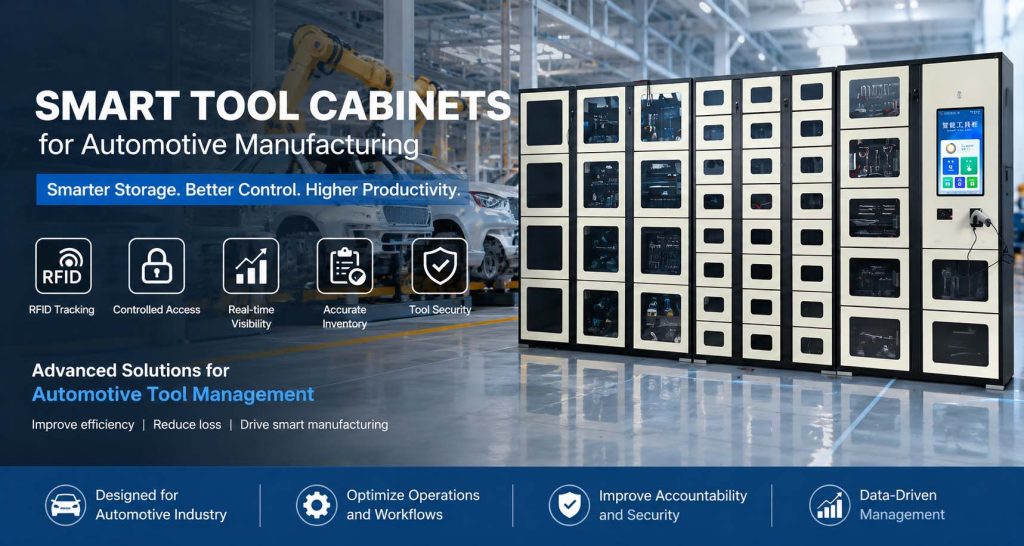
A Smart Tool Cabinet provides a more intelligent approach to Automotive Tool Management, helping automotive manufacturers improve tool visibility, control, security, and operational efficiency.
Why Automotive Manufacturing Needs Better Tool Management
Automotive production involves a wide variety of tools, including:
- Hand tools
- Power tools
- Torque wrenches
- Measuring instruments
- Maintenance tools
- Assembly tools
- Cutting and machining tools
- Inspection equipment
Many of these tools are high-value or precision equipment. When tool management relies on manual records, open shelves, or traditional cabinets, several problems can occur.
1. Difficult Tool Tracking
Workers may spend considerable time searching for a required tool. Without a centralized tracking system, managers may not know the exact location or current user of a tool.
2. Tool Loss and Unauthorized Use
Tools can be misplaced, borrowed without authorization, or returned to the wrong location. Over time, these issues can increase replacement costs.
3. Inefficient Inventory Management
Manual inventory checks require employees to count and record tools regularly. This is time-consuming and can result in inaccurate inventory information.
4. Production Delays
When a critical tool cannot be found quickly, maintenance or assembly operations may be interrupted. In high-volume automotive manufacturing, even small delays can affect production efficiency.
5. Limited Accountability
Traditional storage systems often provide limited information about who accessed a tool and when it was removed or returned.
What Is a Smart Tool Cabinet?
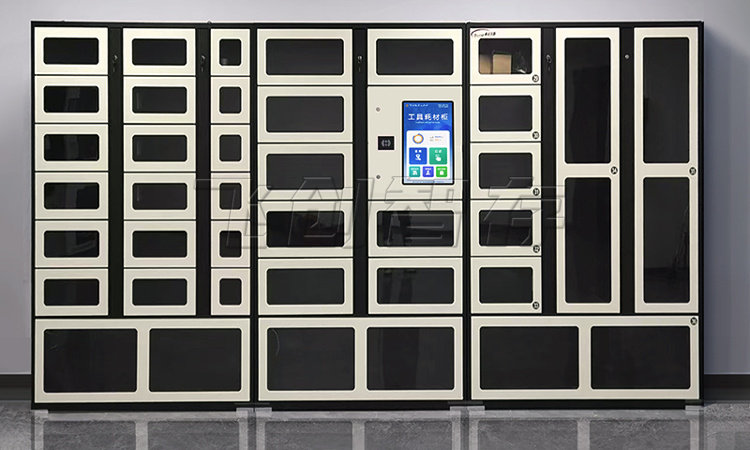
A Smart Tool Cabinet is an intelligent storage solution designed to provide controlled access, automated tool tracking, and real-time inventory visibility.
Depending on the configuration, a smart cabinet can integrate technologies such as:
- RFID identification
- Electronic locks
- User authentication
- Barcode or QR code scanning
- Weight sensing
- Access records
- Inventory management software
- Real-time data synchronization
Instead of simply storing tools, the cabinet becomes part of a digital Automotive Tool Management system.
How Smart Tool Cabinets Improve Automotive Tool Management
1. Real-Time Tool Visibility
A smart cabinet can automatically record tool access and inventory information.
Managers can quickly understand:
- Which tools are currently available
- Which tools have been removed
- Who accessed a tool
- When a tool was taken
- Whether a tool has been returned
This improves visibility across production and maintenance departments.
2. Faster Tool Access
Tools can be organized according to production requirements, tool type, or work station.
Employees can quickly locate and access the required equipment instead of searching through drawers, shelves, or multiple storage areas.
This helps reduce non-value-added time and supports more efficient production workflows.
3. Improved Tool Security
For high-value or specialized automotive tools, access control is particularly important.
Smart cabinets can use methods such as:
- RFID cards
- Employee ID authentication
- Passwords
- Fingerprint recognition
- Other electronic authorization methods
Only authorized employees can access specific tools or cabinet areas.
4. Automatic Usage Records
Every tool transaction can be recorded digitally.
For example:
Employee → Tool Access → Time → Tool ID → Return Status
This creates a clear usage history and improves accountability.
If a tool is missing, managers can review access records and quickly identify the last recorded user.
5. More Accurate Inventory Management
Manual inventory counting can be reduced through automated identification and tracking technologies.
The system can help identify changes in inventory and provide managers with more accurate information for replenishment and procurement decisions.
6. Reduced Tool Loss
When employees know that tool access is recorded, unauthorized removal and improper handling can be reduced.
At the same time, managers gain better visibility into frequently lost or misplaced tools.
This can help automotive manufacturers reduce unnecessary replacement costs.
Smart Tool Cabinets in Different Automotive Manufacturing Scenarios
Smart Tool Cabinets can support multiple areas of automotive production.
Automotive Assembly Lines
Assembly workers often need quick access to specific tools during production.
Smart cabinets can be positioned near workstations, allowing employees to access required tools while maintaining controlled inventory.
Maintenance Workshops
Maintenance teams use a large variety of tools for equipment inspection and repair.
A smart cabinet helps maintenance departments track tool usage and ensure that essential tools are available when needed.
Tool Rooms
Centralized tool rooms may manage hundreds or thousands of tools.
Smart storage systems can improve tool classification, access management, and inventory visibility.
Quality Inspection Departments
Precision measuring instruments and inspection equipment require careful management.
Smart cabinets can help control access and maintain usage records for sensitive equipment.
Production and MRO Management
For manufacturing organizations with multiple production areas, smart cabinets can provide standardized tool management across different departments.
RFID and Smart Technology for Automotive Tool Management
RFID is particularly useful for automotive tool management because each tool can be assigned a unique digital identity.
A typical workflow can be:
Tool Registration → RFID Identification → Employee Authentication → Tool Access → Automatic Record → Tool Return
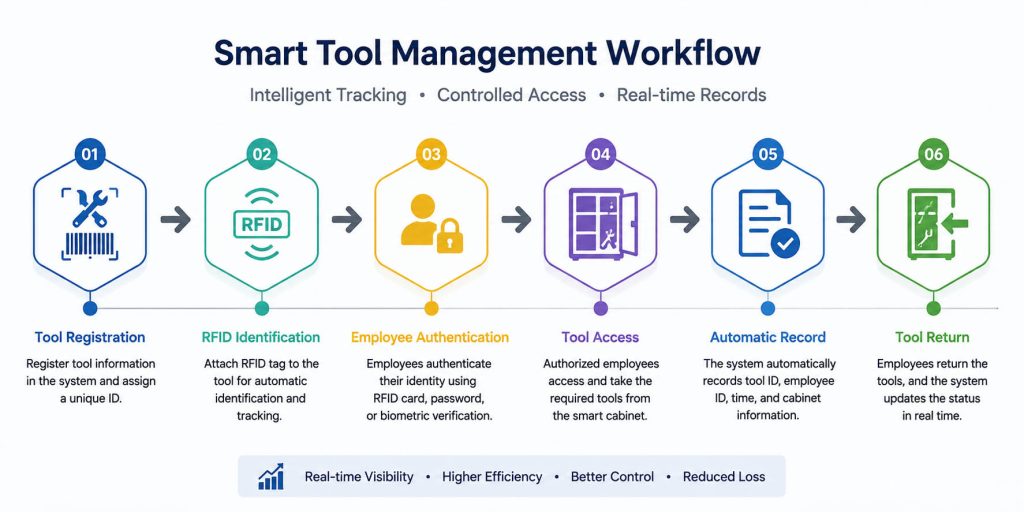
When a worker takes a tool, the system can associate the tool with the employee and record the transaction. When the tool is returned, the system can update its availability status.
This creates a more transparent tool management process compared with manual sign-out sheets.
Smart Tool Cabinet vs. Traditional Tool Storage
| Feature | Traditional Tool Storage | Smart Tool Cabinet |
|---|---|---|
| Tool identification | Manual | Automated |
| Access control | Limited | Intelligent |
| Usage records | Paper/manual | Digital |
| Inventory visibility | Periodic | Real-time or near real-time |
| Accountability | Limited | User-based tracking |
| Tool security | Basic | Controlled access |
| Inventory counting | Manual | Automated options |
| Data management | Disconnected | Software-integrated |
| Scalability | Limited | Suitable for expanding operations |
The key difference is that a traditional cabinet primarily provides physical storage, while a Smart Tool Cabinet combines storage with digital management and data visibility.
How to Choose a Smart Tool Cabinet for Automotive Manufacturing
Automotive manufacturers should consider several factors when selecting a smart storage solution.
1. Tool Types and Dimensions
Different tools require different storage configurations. Cabinet drawers, compartments, and internal layouts should match the size and characteristics of the tools.
2. Identification Technology
RFID, barcode, QR code, weight sensing, or a combination of technologies may be appropriate depending on the application.
3. Access Control
Consider whether the cabinet requires employee authentication, department-based permissions, or different access levels.
4. Software Integration
For larger automotive manufacturers, integration with existing inventory, ERP, MES, or production management systems can improve the value of the solution.
5. Scalability
The system should be able to support additional cabinets, tools, employees, and production areas as the business grows.
6. Manufacturing Quality
Automotive production environments can be demanding. Cabinet construction, durability, locking mechanisms, electronic components, and software reliability should all be considered.
Benefits of Smart Tool Cabinets for Automotive Manufacturers
Implementing smart tool storage can provide several long-term benefits:
Higher Productivity
Employees spend less time searching for tools.
Better Tool Control
Managers can monitor tool access and availability.
Lower Replacement Costs
Improved accountability can help reduce tool loss.
More Accurate Inventory
Automated tracking reduces dependence on manual records.
Improved Security
Access permissions help protect valuable equipment.
Data-Driven Management
Usage data can support better procurement, maintenance, and operational decisions.
Building a Smarter Automotive Tool Management System
A Smart Tool Cabinet should not be viewed as an isolated piece of equipment. It can become part of a broader digital tool management strategy.
A complete solution may include:
Smart Cabinets + RFID Technology + Access Control + Inventory Software + Data Analytics
Together, these technologies can help automotive manufacturers move from traditional tool storage toward a more connected and intelligent management model.
As automotive manufacturing continues to adopt automation, digitalization, and Industry 4.0 technologies, intelligent tool management will become increasingly important for improving operational efficiency and reducing unnecessary costs.
Conclusion
Effective Automotive Tool Management is essential for maintaining productivity, controlling equipment costs, and supporting reliable manufacturing operations.
Smart Tool Cabinets provide automotive manufacturers with a practical way to improve tool tracking, access control, inventory visibility, and accountability. By combining intelligent storage hardware with RFID and digital management technologies, manufacturers can create a more efficient and transparent tool management process.
For automotive companies looking to modernize their production and maintenance operations, Smart Tool Cabinets can be an important step toward smarter, more efficient manufacturing.
Frequently Asked Questions
What is Automotive Tool Management?
Automotive Tool Management refers to the systematic tracking, storage, access control, maintenance, and inventory management of tools used in automotive manufacturing and maintenance.
How does a Smart Tool Cabinet work?
A Smart Tool Cabinet uses technologies such as RFID, electronic locks, user authentication, sensors, and software to control access and track tool inventory and usage.
Can Smart Tool Cabinets be used on automotive assembly lines?
Yes. They can be installed near assembly stations, maintenance areas, tool rooms, and other locations where workers need controlled and convenient access to tools.
Can RFID be integrated into automotive tool management?
Yes. RFID can provide unique identification for individual tools and help automate tool access and inventory tracking.
What are the main benefits of Smart Tool Cabinets?
The main benefits include improved tool visibility, faster access, better security, reduced tool loss, more accurate inventory management, and improved accountability.